Breath, Posture, and Core Stability: The Foundation of Efficient Movement
Posted on 22. February 2026
The Movement Screen
When you first start working with me, one of the very first things we do is a Movement Screen.
A movement screen evaluates your joint mobility, stability, and the way your body moves. It allows me to see where your body might be compensating, where it’s strong, and where it could be vulnerable (Cook, Burton and Hoogenboom, 2014).
It might seem unimportant at first, - I know you’re probably eager to get to the “actual” training - but this step is crucial. Without it, I wouldn’t be able to design a program that truly meets your body’s specific needs.
The goal isn’t just to build stronger muscles - it’s to build a body that functions well. We train not only for strength, but for coordination and stability (McGill, 2010). This allows you to move confidently, reduce your risk of injury or falls, and maintain a high quality of life at any age.
The Ideal Posture We’re Born With — and How We Lose It
Your body already knows how to move properly. As a baby, you naturally learned to breathe, brace, roll, crawl, and stand in ways that protected your joints and made movement efficient (Vojta, 2007). These developmental movement patterns form the foundation of later postural control and stabilization (Kolar et al., 2010). Over time, stress, long hours of sitting, injuries, and daily habits disrupt those patterns.
Throughout life, we all develop posture adaptations - rounded shoulders, forward head posture, or uneven weight shifts. These adaptations do more than just change how we look; they increase compressive forces on joints, limit mobility, reduce movement efficiency, and often lead to pain or compensations elsewhere in the body (Sahrmann, 2002; McGill, 2007).
To move well and prevent injury, we need to retrain the nervous system to remember the posture and movement patterns we learned naturally as children (Schmidt and Lee, 2011).
Once your body “remembers” how to move efficiently, strength, stability, endurance, and performance all become easier and safer.
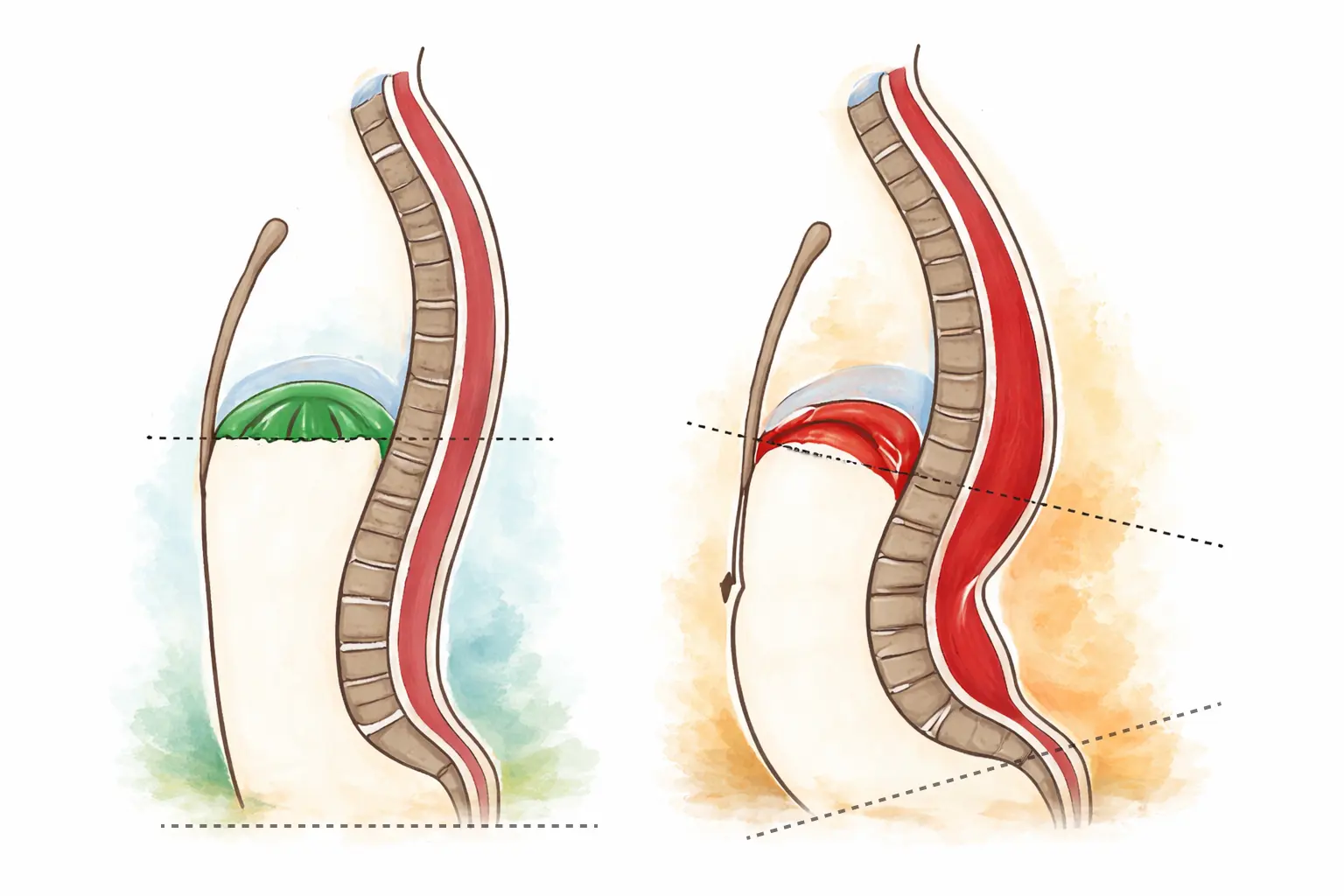
The Deep Stabilization System
This all starts with the breath. Breathing isn’t just about oxygen - it’s about stability, pressure control, and movement efficiency (Hodges and Gandevia, 2000a, 2000b). Poor breathing patterns can reduce core engagement, increase tension in the spine and joints, and make movements less effective, which may raise the risk of injury (Hodges and Gandevia, 2000).
Proper breathing activates the deep stabilization system, a functional “cylinder” made up of the diaphragm, transversus abdominis, pelvic floor, and multifidus (Hodges and Richardson, 1997; Hodges and Gandevia, 2000a; Kolar et al., 2010). With the rib cage and pelvis working together as one coordinated unit, this system creates the internal pressure needed to stabilize the spine and pelvis (Hodges et al., 2005; Hodges and Gandevia, 2000b; McGill, 2010; Lewit, 1999).
However, this system cannot function optimally on its own if surrounding muscles are excessively tight, weak, or poorly coordinated.
Training the Body to Work Together
Once we’ve identified areas of imbalance, the next step is targeted training. Tight or overactive muscles are gradually stretched, weak or underactive muscles are strengthened, and all movements are trained in functional coordination (Page, Frank and Lardner, 2010). With repetition, your central nervous system stores these patterns, so good posture and efficient movement become second nature (Schmidt and Lee, 2011).
Several evidence-informed systems support this process. Dynamic Neuromuscular Stabilization (DNS), developed by Pavel Kolář, focuses on developmental movement patterns and breathing to build coordinated stabilization (Kolar et al., 2010). Other well-known methods, like the McKenzie Method, Williams flexion exercises, and Stuart McGill’s spinal stabilization strategies, also focus on restoring proper posture and functional, pain-free movement (McKenzie and May, 2003; McGill, 2007).
To Conclude
By assessing movement, retraining posture, optimizing breathing, and reinforcing functional stabilization through targeted, evidence-based training, you teach your body to move efficiently - automatically and effortlessly. When your deep stabilization system works as it should, your joints stay centered, your muscles work together in balance, and your functional movement patterns are restored. This reduces stress on the body and helps prevent pain (McGill, 2010).
Resources
- COOK, G., BURTON, L. and HOOGENBOOM, B., 2014. Functional movement screening: the use of fundamental movements as an assessment of function. International Journal of Sports Physical Therapy. 9(3), pp.396–409.
- HODGES, P.W. and RICHARDSON, C.A., 1997. Contraction of the abdominal muscles associated with movement of the lower limb. Physical Therapy. 77(2), pp.132–142.
- HODGES, P.W. and GANDEVIA, S.C., 2000a. Activation of the human diaphragm during a repetitive postural task. Journal of Physiology. 522(1), pp.165–175.
- HODGES, P.W. and GANDEVIA, S.C., 2000b. Changes in intra-abdominal pressure during postural and respiratory activation of the human diaphragm. Journal of Applied Physiology. 89(3), pp.967–976.
- HODGES, P.W., ERIKSSON, A.E., SHIRLEY, D. and GANDEVIA, S.C., 2005. Intra-abdominal pressure increases stiffness of the lumbar spine. Journal of Biomechanics. 38(9), pp.1873–1880.
- KOLAR, P., SULC, J., KYNCL, M. et al., 2010. Stabilizing function of the diaphragm: dynamic MRI and synchronized spirometric assessment. Journal of Applied Physiology. 109(4), pp.1064–1071.
- LEWIT, K., 1999. Manipulative Therapy in Rehabilitation of the Locomotor System. 2nd ed. Elsevier.
- MCGILL, S., 2007. Low Back Disorders: Evidence-Based Prevention and Rehabilitation. 2nd ed. Champaign: Human Kinetics.
- MCGILL, S., 2010. Core training: Evidence translating to better performance and injury prevention. Strength and Conditioning Journal. 32(3), pp.33–46.
- MCKENZIE, R. and MAY, S., 2003. The Lumbar Spine: Mechanical Diagnosis and Therapy. Waikanae: Spinal Publications.
- PAGE, P., FRANK, C. and LARDNER, R., 2010. Assessment and Treatment of Muscle Imbalance: The Janda Approach. Champaign: Human Kinetics.
- SAHRMANN, S., 2002. Diagnosis and Treatment of Movement Impairment Syndromes. St. Louis: Mosby.
- SCHMIDT, R.A. and LEE, T.D., 2011. Motor Control and Learning: A Behavioral Emphasis. 5th ed. Champaign: Human Kinetics.
- VOJTA, V., 2007. Vojta Therapy: Reflex Locomotion in the Rehabilitation of Neuromotor Disorders. Munich: Urban & Fischer.